If you’ve ever experienced back pain, you’ve probably heard the advice that you need a firmer mattress.
For many years, firm mattresses were widely recommended as the best option for people with back problems. However, modern sleep research and mattress design have shown that the answer is not quite that simple.
The best mattress for someone with back pain is not necessarily the firmest mattress available. Instead, it is often the mattress that provides the right balance of support and comfort for that individual’s body shape, weight, sleeping position, and personal preferences.
Support and Firmness Are Not the Same Thing
One of the biggest misconceptions about mattresses is that support and firmness mean the same thing.
Firmness describes how a mattress feels when you lie on it. Support refers to how well the mattress keeps your spine in a comfortable and neutral position throughout the night.
A mattress can feel firm but provide poor support, while a softer mattress can still offer excellent spinal support if it is designed correctly.
When choosing a mattress for back pain, support is usually the more important factor.
Why Extremely Firm Mattresses May Not Always Help
While some people find a firmer mattress comfortable, an overly firm mattress can create its own problems.
If a mattress is too firm, it may not allow the shoulders, hips, and other pressure points to sink in enough. This can place additional stress on joints and muscles and may contribute to discomfort during the night.
Some people also find themselves tossing and turning more frequently on an overly firm surface, which can disrupt sleep quality.
Why a Mattress That Is Too Soft Can Also Cause Problems
At the other end of the spectrum, a mattress that is too soft may allow parts of the body to sink excessively.
When this happens, the spine can fall out of its natural alignment, potentially contributing to discomfort or stiffness when waking.
This is one reason older mattresses that have developed sagging areas often become uncomfortable for people with back problems.
Finding the Right Balance
For many people with back pain, a medium to medium-firm feel provides a comfortable balance between support and pressure relief.
The goal is to allow the body to settle naturally into the mattress while maintaining good spinal alignment.
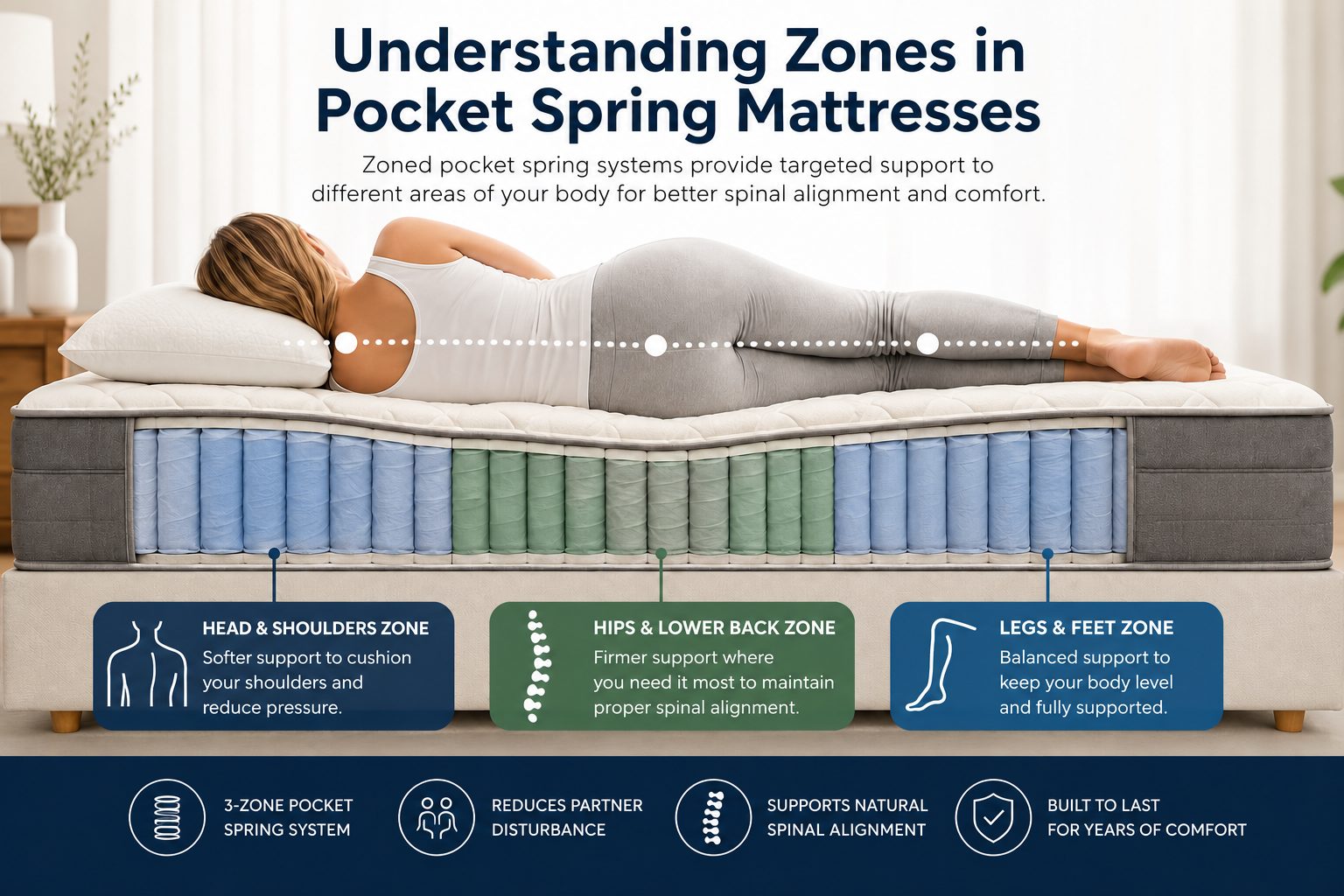
A mattress should support the heavier areas of the body, such as the hips and torso, while also cushioning the shoulders and lower back.
Because every person is different, there is no single firmness level that works for everyone.
Sleeping Position Matters
The best mattress firmness often depends on how you sleep.
Side Sleepers
Side sleepers typically benefit from enough cushioning to allow the shoulders and hips to sink slightly into the mattress. A mattress that is too firm may create pressure points and discomfort.
Back Sleepers
Back sleepers generally need a mattress that supports the natural curve of the spine while preventing excessive sinking through the hips.
Front Sleepers
Front sleepers often require a mattress that prevents the midsection from sinking too deeply, which can place strain on the lower back.
The Role of Pocket Springs
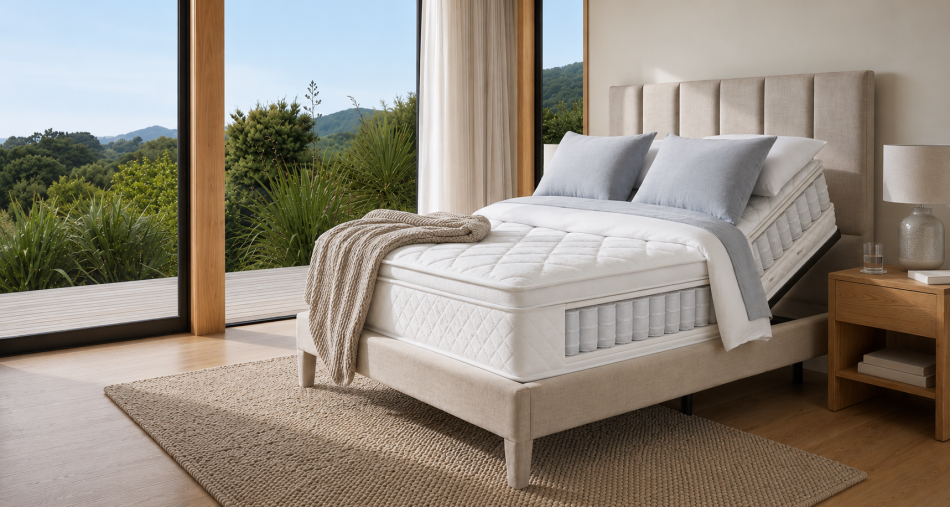
Modern pocket spring systems can be particularly beneficial for people seeking a combination of support and comfort.
Because each spring responds independently, pocket springs can provide targeted support to different areas of the body while reducing pressure points. This allows the mattress to adapt more effectively to individual body shapes and sleeping positions.
When combined with quality comfort layers, pocket spring mattresses can offer both spinal support and pressure relief, which are important considerations for people experiencing back discomfort.
Can Mattress Materials Make a Difference?
The comfort layers within a mattress can also influence how it feels and performs.
Materials such as memory foam, wool, and other comfort layers each offer different benefits.
For example, memory foam can help distribute body weight and reduce pressure points, while natural fibres such as wool can contribute to breathability and moisture management. The ideal combination often depends on individual comfort preferences and sleeping habits.
When Is It Time to Replace Your Mattress?
Sometimes the issue is not the firmness of the mattress but its age and condition.
Signs that your mattress may need replacing include:
- Visible sagging
- Indentations that remain after getting up
- Waking with aches and stiffness
- Increased tossing and turning
- Feeling more comfortable sleeping elsewhere
An ageing mattress may no longer provide the support it once did, regardless of how firm it originally felt.
So, Is a Firmer Mattress Better for Back Problems?
Not necessarily.
For many people, the best mattress for back pain is one that provides the right combination of support, comfort, and pressure relief rather than simply being as firm as possible.
A mattress that helps maintain healthy spinal alignment while allowing the body to relax comfortably is often a better choice than one that is excessively firm.
Because every person is different, the ideal mattress will depend on factors such as body type, sleeping position, comfort preferences, and the nature of any back discomfort.
If you’re experiencing back pain and wondering whether your mattress may be contributing, taking the time to find the right level of support and comfort could make a significant difference to both your sleep quality and overall wellbeing.
For more advice on improving sleep quality, explore our other articles on mattress support systems, sleep habits, pocket spring technology, and creating the ideal sleep environment.